Wednesday, September 18, 2013

ACTIONS, CAMPAIGNS, OBSTACLES, AND TRANSITION

It is so inspiring to learn how hundreds of community initiatives and experiments for social and environmental sustainability are being carried out today by many people and activists around the world. It is important to learn not only about this, but also about the many projects that support and advance people’s rights and humane and ethical development, meaning not oppressive and destructive to humans and nature. I think working or being involved with this can be very empowering knowing your every step is an important phase not only for your personal growth but also for others as well. Having initiatives like this is the most visible and realistic of all ideals we have. For decades, successful partnership of honest NGO’s and sincere individuals/community, committed to actualize the project and see it’s ‘fruit’ all through the years, thrived and spread through many generations. Alliances like these serve as a model community or program for the people to explore many possibilities of acting in many choices (unlike in the mainstream that is very limited to voting, paying taxes and dealing with petty crimes) for the things essential to our individual and collective well-being. Some examples here are community gardens, CSA’s, low-cost housing, alternative energy, natural housing, permaculture farms/sites, free schools, community centers, etc. Anyway, here are some interesting websites to look if you want to learn about some of the projects that I'm telling here.

THE TRANSITION NETWORK 
http://www.transitionnetwork.org

NAVDANYA MOVEMENT
http://www.navdanya.org

GRASSROOTS INTERNATIONAL
http://www.grassrootsonline.org

As part of the SG vision, we are trying to connect globally especially to those who are doing these kinds of project in order to: further possibilities of communal transition, expand the horizon of our place in the global natural system, increase the chance or opportunity of getting financial support, help others get more perspectives regarding organic gardening, community initiatives, and environmental sustainability, encourage more volunteers and promote the vision to a wider arena, strengthen the capacity by getting more allies in combating global scarcity and socio-political crises, learn many different methods of organic gardening, alternative energy, and community improvement, and help establish a global community that will dismantle the concept of national borders. So up to this moment, our group is still looking for ways to continue the social center/community library project as we see that it is one of the most effective ways to connect to people. In addition, as we still don’t have a final area suited for long-term community gardening project so what we are doing basically is preparing ourselves and learning many different aspects regarding these initiatives. Again, aside from teaching ourselves, we also educate others about important issues such as food, land, community, human rights, and other things related to our vision.


Speaking of food, one of our programs is to spread awareness and start a campaign against GMO and the companies that perpetrate this kind of hazardous biotech invention. One of the most popular of this is Monsanto, the giant transnational biotech company that is undeniably responsible for many atrocities happening around the world since almost the beginning of industrial revolution. This company is one of the biggest producers of chemicals (such as Round Up, etc.) and other synthetic pesticides that destroyed many farm lands around the world. Not only this, Monsanto also helped in the production of DDT and other poisonous pesticides used in the war on Vietnam in the 60’s. Up to now, with their bio-engineering, genetic experiments and political influence, Monsanto is still ruthlessly committing ecological and biological terrorism all over the globe. The company that is rampantly abusing farmers and perpetuating violence against nature is also the company that is influencing policies and laws regarding agriculture and food production. To give you more ideas and options on how to help, please check these links:

  
MONSANTO'S HISTORY
http://en.wikipedia.org/wiki/Monsanto

OR THIS:
http://www.gmwatch.org/gm-firms/10595-monsanto-a-history

CAMPAIGNS:


MILLIONS AGAINST MONSATO
http://www.organicconsumers.org/monsanto/

CAMPAIGN MATERIALS:
http://www.organicconsumers.org/monsanto/materials.cfm

OCCUPY MONSANTO
http://occupy-monsanto.com/


COMMUNITY LIBRARY AND INFORMATION CAMPAIGNS
 So as a response to this problem, our group is committed to initiate public awareness about this issue. We produced informational videos, posters, and text in local dialects. Every now and then, we organize film screening, discussions and leafleting regarding this issue because we strongly believe that it is very important to educate the public first about this ‘crisis’ for them to take action sincerely. Last May in this year, we organized a public demonstration against Monsanto and GMO and although there were not so many people who participated, it was a successful action in terms of spreading public awareness.  


In connection to this campaign, we are also currently doing a school to school awareness exhibition. In this, we exhibit posters and artworks that depict issues about GMO/biotech, health, organic gardening, natural lifestyle, and community actions. This month-long school to school program is entitled: Sustainable Social Paradigm: Organic Gardening, Natural Health, and Intentional Communities. Along with photo exhibition, we do film screening and discussion to educate the students and teachers about these matters. As a result, we got connected to the teachers that are also into these kinds of interest and plan to work together in the future. As part of their ‘Sustainable School’ initiative, they want to incorporate some of their strategies to our programs since they are closely related.    


ABOUT THE GARDEN...
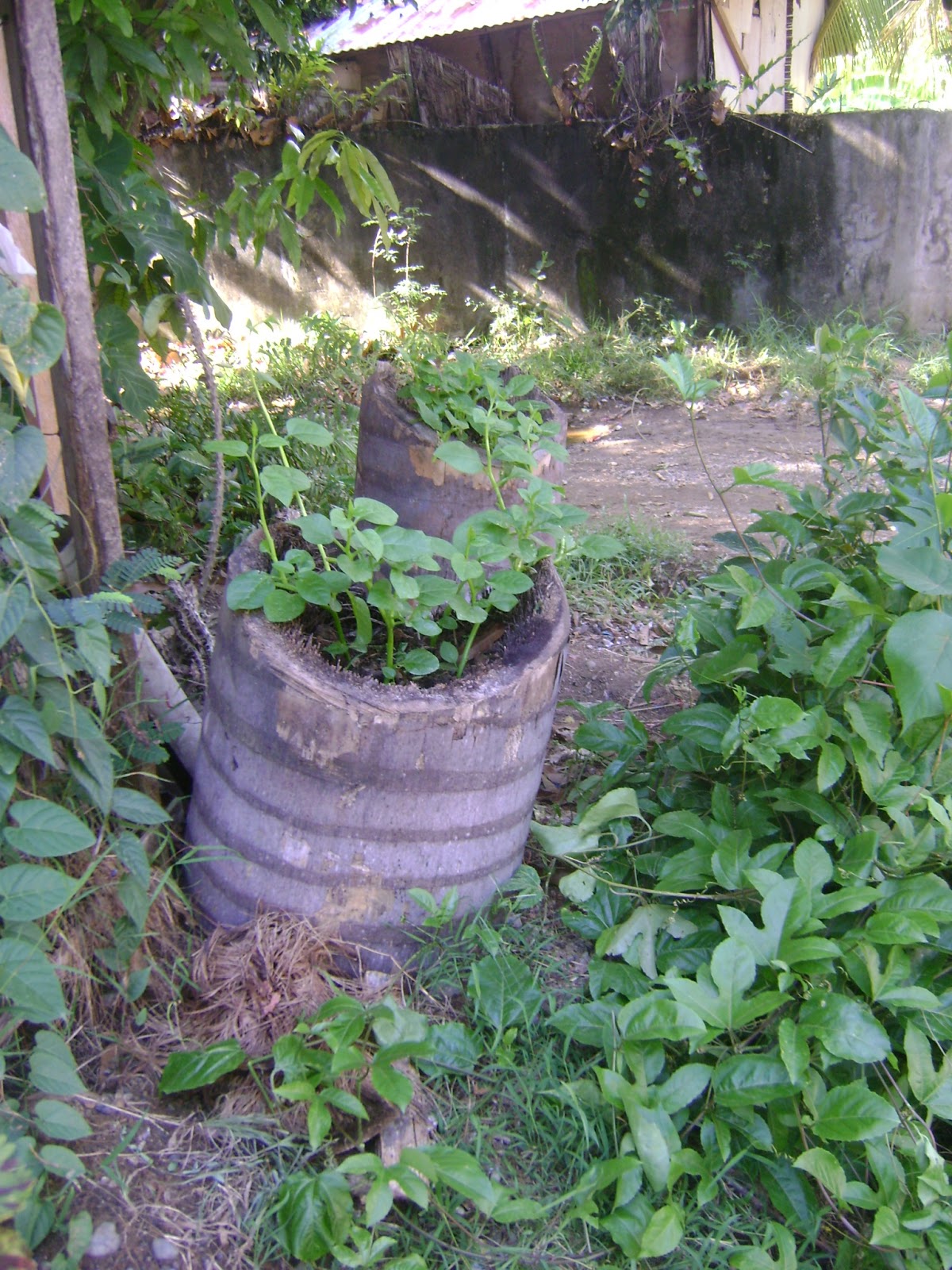
Regarding our garden, we will put here some photos we’ve taken some months ago. Obviously, sharing garden here in Bread Homes is almost coming to an end since there is not enough community support and the land in the area is very poor. As you can see, we can plant some things but it doesn’t produce enough that is at least fair to the effort we are giving. The solution is to find another area especially permanent so that it will be assuring for all the people who want to get involved. 


Anyway, thanks to our new friend Clarke, he sometimes helps us in our projects and it is quite inspiring to learn about his visions and ideals too. We enjoy being with his company so much since he is one of the few people here in Bread Homes that think about things essential to community. 


Bread Homes Volunteer Action Day and Ecological Camping

Last August 8, Organic Minds organized a community gathering and volunteer day to get help from volunteers and friends. It was also a great opportunity to evaluate some of our projects. It was also a half-day event of book and poster covering, film viewing and musical performances. Participants contributed to the event and brought food for everybody. It was a great day since many of our friends came to enjoy the day and share different things. On August 31, together with other members of CGINET (Common Ground Initiative Network), we helped organized an ecological awareness camp some kilometers away from the city. 


With almost fifty participants, students and out-of-school youth, the event ran smoothly for two days full of meaningful workshops and discussions about the various projects of the network including the Sharing Garden, KU Free School, Food Freedom, Organic Minds Community Library and others. Not only about the projects but it was also a perfect opportunity to educate the community (mostly youth that are protecting the Davao City watershed area in Tawan-tawan, Calinan) about other important issues related to the environmental and social problems we all are facing. 


That area is the only community who refused to use the non-organic method of farming since companies like DOLE entered this area. It was amazing to learn about the effort that this community does to protect their environment and also the ideas some of the young children has regarding the situation of their natural habitat. 


During the evening of that camp, we exchanged presentations that made the night very exciting and unforgettable. Some performed their traditional dances and their own musical compositions that tell about living and working for the natural world. On the second day, they brought us to the nearby river where we enjoyed swimming and hiking. As a result also, we exchanged contacts to plan the next actions.  


So to update you about the garden again, we are very sad to tell you that there is a very serious problem right now. First is that the former caretaker of the area wants to use half of the area again (after we installed fences!) and has burned huge part of the garden as his method of getting rid of the grasses. Before that, he sprayed Round Up without our consent; he did this during our camping activity so we obviously didn’t have the chance to say no. This man is known in the community of Bread Village as a greedy and selfish idiot who sometimes harvest other people’s fruits. When we arrived from the camping, we were surprised and disappointed with the news. 


After few days, he burned the area and now, he doesn’t want us to plant on that area anymore! As we are having an argument, he threatened me stay off of that part or else he will hurt me. To prevent things from getting worst, I left him screaming in frustration and anger. As what we’ve thought before, this will be very problematic since we don’t have a tangible support from other people and also from the owners. 


We used to send them (the owners) emails and updates about the project but up to now we don’t get any response that would at least encourage us to continue using that area. Well, as for Organic Minds, this will not stop us from continuing our plans since we can do this in other area. Hopefully next year, we can finally get a financial support that would enable us to get a permanent land so that this dream of having a successful community garden project will happen. 

Tuesday, July 2, 2013

Sharing Garden and the Last Election


Some few critical people say it is normal for “Filipinos” to choose the easy way or result to what they do. I mean the expression they call “easy money”, or being paid instantly for their service. For decades of hardship and political trauma, people have been attuned into the notion of instant ease and pleasure against poverty and destitution that they are facing no matter what this may take. So last month we had an election and many people participated. There were several news about cheating, serious technical errors, and of course, violence. There were also ridiculous, stupid, and devious political ads about many different lying and power hungry candidates that will do anything just to mislead the voters and win their trust. There were also actual killings for the sake of holding the power and the key to the government budgets and political projects. The state was always in action and the Media made sure that the masses will be captivated and deceived by this spectacle and illusion of "nation-ness and social democracy".


Please check these sites for more info:
http://newsinfo.inquirer.net/408153/seven-dead-in-philippine-election-day-violence

http://www.philstar.com/headlines/2013/05/07/939222/election-violence-35-killed-so-far


 Yes it was dirty, the tricks, the whole dynamics of the election. Unknown to many, there were several cases of abuse and exploitation happening all over the country. Despite their hard life, most people are not interested to know what is happening. I was once asked by a neighbor who am I going to vote. I answered him without hesitation that I don’t want to vote and I don’t have a plan to participate in that stupid circus. I explained to him my views about the subject and have him agreed to my opinions about these candidates and the system in general. I also told him that those are the reasons why I don’t want to ask help from the government or any politician for this project. It’s because many times people suggested to me that if I ask the local government for support, they will help me make the SG successful. So as what I usually answer, I say no I don’t want to let them use me or take advantage to the SG for their own sake. He appreciated the fact that I don’t want to sell out, and we continued to express our views without offending each other that might create another obstacle to SG. I then concluded that perhaps the neighbor’s attitude towards the project has the same patterns with their attitude towards politics or election in particular.


 I mean maybe they want easy things for the garden as well. In elections, even though people knew how bullshit and corrupt the politicians are, and they already have distrust on these people, they still allow themselves to be bought. They still work for these people during election season and this is a very sad picture of how indifferent or pathetic they are. First, they allow these people to rule over them by accepting the authority and they help these politicians to get into the power again to exploit them more. In many parts of the country, politics is known to be the greatest feast of corruption. For so many years this type of people are looting and exploiting the resources to a great extent. Voters or ordinary citizens are drowning in poverty while politicians get richer and richer. From “Barangay” to the National level, millions of pesos are being stolen every year for various stupid reasons and excuses they call “government projects” but in reality nothing is really happening except for more favors to businesses and rich people. In some other parts of the country, sad to say, people get paid for giving the votes of their whole family. I heard some candidates pay 10,000Php just get the whole family vote. Some even uses fake money to deceive and riff the voters off. 


Here in Davao, I heard that sometimes some politicians pay 250Php for a rally and then make a list of these people perhaps to make sure that those participants who accepted the amount will vote for them. I couldn’t tell more but all I can say is that it’s quite unusual for a decent person or politician to do these kinds of things. But as you can see the pattern, this is another manifestation of “easy money mentality”. For some of these people, it is a natural thing to do to “take back what’s been stolen” from them. It is a common expectation that these politicians will steal from the people anyway, why don’t accept that money or sell their votes?

Saturday, June 22, 2013

Living in the Library


In this community where we live only few people read books and only few show some interest to the library project. Having many books seems absurd and useless since there’s not much borrower so sometimes we organize gigs and different kinds of gathering just to promote the books, spread reading culture, or just simply invite more visitors. I still remember the excitement we had before when we were just collecting those books or starting the community library project; it was totally electrifying and wonderful. Our categories are consist of diverse issues ranging from sociology, history, philosophy, ecology and radical environmentalism, positive psychology, spirituality and transcendence, esoteric studies and religion, science and technology, race, gender, politics and many fiction and poetry collection. These issues are overwhelming but we strive our ways to make everything balance, cultivate our self-reflection, and maintain the mental and spiritual health. So in the midst of all chaos, anxiety, confusion, insecurities and alienation we pursued to have this vision actualized. Being in a place where intellectual stimulation is valued and can be easily practiced, where the past, the present, and the future meets, and where all aspects of humanity and life is being analyzed and being defined, reasons and inspirations are constantly flowing and spreading. In the heart of a lazy and apathetic society where gambling and other nonsensical matters are more important than knowledge and creativity, we decided to form a book club, organized book swaps and Really Really Free Market, semi-book fest, poetry readings, and library parties. Through this we’ve met many people, made a lot of friends, and lost many books (but we don’t look at it as loss). But living here is not only about being a self-styled librarian, we are also struggling with many different ideals, old or new, that are counter-intuitive and provocative to the norms that brought us up in our individual homes. 


Living collectively is not easy especially when you’re not ready to leave those comfort zones inside your head. There would be too much pressure, various sensitivities that you need to consider. Patriarchy, authoritarianism, sexism, consent, consensus, physical and mental space, individual differences and choices, etc. Trying to be politically correct all the time is impossible and perhaps a ridiculous action, but perpetuating the patterns of oppression is not cool either. So we walk the talk, practice what we preach, dismantle the role, shatter the myth, rotate the tasks, resist oppression internally, fight the powers “inside the house”, do the revolution, and disobey the law. Meaning we deconstruct important issues such as nuclear family setting, female role and the power of male gender, conflict and resolution, bullying, dishonesty, etc. and tried to be sensitive, inclusive, responsive, productive and effective. We politicized ourselves and practice the best things we prefer and maintain the existence of “revolution” or just simply “change” and tried to live harmoniously. So here boys wash clothes and dishes, cook food, clean the kitchen, and water the plants. 


Unlike in most houses where often males do the decision making, ours is a place where both ideas are encouraged, valued and considered. In terms of consumption or how do we behave as consumers (this is tricky!), I can say there were many times we violated our conscience but in our day to day living in general, we tried to avoid using so much stuff or buying too much. We usually avoid buying food in plastics, in cans and other non-biodegradable wrappers. We also avoid using too much shampoo, toothpaste or soap and we don’t buy soft drinks, perfumes, deodorants, etc. We also don’t eat at Mcdonalds or Jollibee or any of those crazy stuff advertized in the TV. Again, I’m not saying we totally avoided these things but what I’m trying to explain here is that we are conscious and eager for environmental sustainability and social empowerment ans so we are trying/willing to sacrifice our addictions for the sake of a healthy and humane future. I realized to write down all these because I wanted to see the things that are essential for our collective growth; through deconstruction and comparison to wherever houses that I visited, I can identify the differences and similarities. Almost everywhere you go today, at any age, these things are very rampant and dominant. People are pathetically being conditioned to endless irresponsibility and ignorance; being indifferent is normal and there’s no room for intellectual, sincere, responsive or productive social interaction. That is why I am proud to be in this situation because in this place where we live, consciousness and sensitivity to these issues are being cultivated and improved for the collective progress and psycho-social health. 


In the past four years our life in this place was fair enough; we are happy because of so many wonderful experiences that we had here. We met many people from different parts of the world especially activists or at least people who are already conscious and politicized. We shared visions, aspirations, ideas, food, money, bed and we sing, dance, cook, swim, go to concerts, and sometimes get drunk together. We’ve learned so many important things from them that opened up new and exciting doors to life. Sometimes, some of these things spark another stories and new beginnings, driving on our motivations intensely and lifted us to a higher ground, the higher truth and realms of our spiritual journey in this sleeping society. In connection to gardening, I cannot forget the times that I shared with our volunteers. These times are more valued because most of them became our good friends, even though we only been together for a very short time. Spending three hours at the garden talking about each other’s experiences and perspectives is a great catalyst for a relationship temporarily dissolving the boundaries of time and space. We explore each other’s value while mutually teaching each other on different ways and preferences and through this, the power of communication and skills add strengths to the SG vision and dedication.

The vision and the spirit

Hello again! I want to write more about the project and beyond as I feel there are still many things to share. Though most of these thoughts are not mainly about Sharing Garden, I still think these are important because they are closely related or relevant to it. As what was planned, the project will also serve as an instrument to promote example of organic gardening and inspire actions to slowly change the current paradigm of food industry that uses chemical pesticides, genetic engineering and other harmful methods of food production. We all know that these transnational companies are the perpetrators of chemical contaminations, genetic monopoly, and modern carcinogens yet they are in charge of our global food supply. Despite of this reality, majority of the people in Davao City are unaware and still dependent to their system of agriculture and food. 

The Volunteers


I received a letter from a friend about the volunteer aspect of their project. It seems the same everywhere in the world; it is not easy to motivate people. Sure there are many reasons for lack of volunteers and every gardening project has its unique situation, but for sure in the context of Davao, economic and family reason are some of those. But even though it is very minimal, it is still worth appreciating and mentioning here; those wonderful times, no matter how short, that we had experienced gardening with interesting people from other parts of the Philippines and also from Europe and the US. We’ve learned many different important things about community actions and their culture; most of them are already exposed to different alternative or intentional community in their place that is why they are more familiar to projects like SG. Compare to them, most people in Davao (or perhaps the whole Philippines) needs to be heavily educated and oriented towards these “alternative ideas” first before they’ll have the motivation to work for these matters. As what I also see as normal, is the people’s inability to clearly comprehend unfamiliar information especially when it’s related to their cultural, psychological, environmental, and economic aspect. Most people I see are contented and dependent to the economic model that is being imposed to them by the same institutions that created these crises on food and other social services. In the issue of technology, computer familiarization is not a priority especially to folks in the middle age and because of this they cannot gain essential information from the internet regarding community initiatives and alternative lifestyles.


Some factors for uninvolved-ment and the cultural comparison

Perhaps another factor underlying these reasons is their lack of economic stability. I can understand that at the moment it is hard for other people to face the challenges of change and responsibility. But in spite of this, I am personally not hopeless that this project will succeed! Perhaps our effort was not enough in terms of educating and motivating people and so we were not effective in attracting more volunteers. As far as I can remember, we tried to reach as many people as we can from all over Davao and even sometimes pushed ourselves to the limit, doing every ways to encourage volunteers. Another visible factor is the “cultural differences” between us and other locals. What bothers me is the fact that people are afraid of new things; they are not yet ready to leave their “comfort zone” and they also don’t want to think that they might be wrong in some of their deeds and ideations. They sometimes justify it through their economic excuses. It’s normal that as long as people are secure economically or when they have the certainty on such projects or initiatives, as what they always consider “job”, they will surely join and help. To explain my statement earlier, I know that most of you will agree that cultural exposure is also very important because it brings strong impact to people or a person. So for example, just because those volunteers we had from other countries are have long been exposed to activism, community resistance, squats, social centers, etc., we don’t need to explain to them everything anymore. Again compare to them, local volunteers or neighbors sometimes have the difficulty seeing the connection of this project to the global sociopolitical and environmental situation or crises that we are facing. I remember one time when one of the trusted pastors of the community asked me “what’s the connection of SG to the problems regarding corporate monopoly and exploitation on food and agriculture, and also to the looming crises on energy especially on oil”. I explained to him everything as if I didn't give him a brochure at the beginning of this project. But I also thought it’s because he didn't know what was happening and doesn't have options other than mainstream information.   


The revolution (and the economics) of everyday life

As social activists we are doing projects and little things to initiate actions and inspire people. No matter how poor we are in an economic sense, we still strive to give service in our own small ways. This is part of our resistance. We value the fact that we are contributing a positive impact to people no matter how little these contributions are. Since we have the capacity and ability to actualize ideas or programs that could promote social awareness and alternatives to the usual ways available in the mainstream market and culture, we will do our best to continue this service. For several years we’ve been helping other groups here in Davao promoting and pushing issues that are currently necessary to address various problems in the society, political and cultural. And for all these years, as what usually happens to many sincere activists working for social upliftment and equality, we’ve never become rich or at least economically well off. Having this, I never had any regrets or shame regarding my personal economic assets or financial status. We don’t get salary or allowance except for the rental support to our house, which is also another kind of project, a community library and social center, and we even use our personal money for some of our projects and activities but we still love to do these things. In good luck we always manage to beat our insecurities and alienation in this society where happiness equates to money and commerce. 


Just to share to you, some of the things/activities we do in SG project are sometimes financed personally. Like the composting for example, 50Php a week is not an easy financial obligation if you don’t have a regular job. If you total it for the whole year it will cost 2,400Php, it’s not that big but it’s quite an amount of money. And for the 50php we can only gather five to six sacks of banana peel. Each delivery cost 20 to 30php, and compare to buying ready-made compost at the mall, which we can get for a hundred peso per 2 kilos, so it makes sense and fairly practical. I can’t really tell how much we can save but it’s quite easy to comprehend why it’s more practical. But when I think of how much money I can save for a month (200php), I still doubt the rationality of this idea so that is why my plan for now is to do the composting in the area close to the source of the materials so that we don’t need to spend this amount for the transfer. All I need to do is bring the wheelbarrow and pick the banana peel and other materials and bring them to the compound near the banana shop or market. Hopefully the owner of the compound will allow us to do that. But on the other hand, I would still love to continue using the area for the compost materials nearby such as cow and goat manures and other organic materials available from the nearby houses and in addition, we still love to do basic gardening in the area. Speaking of economic alternatives, me and my partner is planning to organize a show that will raise at least small funds for the library. This will also help advance the SG project since this library serves as foundation for all the plans we have for SG, and this is where we do our education programs regarding the project. So hopefully this coming month of July, we can invite bands and do the show. Another option is to do busking, this is the most easy way I think gather money for SG. Aside from this, we will also have our third exhibit promoting the SG related issues and other matters related to health, organic farming/gardening, alternative energy and intentional community at the High School nearby (Bernardo National High School). This will happen on July as well.


Tuesday, June 11, 2013

Failures, Weakness, Inspirations and Hope

For the past few months SG has been very quiet. You are probably wondering what happened and maybe some of you thought that we are not going to continue this project anymore. Well to be direct, we fail and we were not efficient this time but at least we have never been passive or asleep. Although for the past few months we were not so much into action in terms of weeding, tilling, planting, or improving the garden, there are still things that helped for the growth of our project or vision.  We were not mainly focusing on the garden as of continuing to do what was planned because there are so many obstacles and there are very few volunteers. First example of these is the soil quality; although it is not totally useless, we can now accept the fact that it cannot produce enough vegetables for many people. We spent so much of our effort doing what we can to improve the area and produce food to share especially to those who help and value the importance of the project but a lot of it was put in vain. 
To be honest, I personally felt so depressed during those past few months but I still don’t forget that there were many positive outcomes along the process. In just more than one year we gained many interesting friends, learned about them and what they do personally or as an organization. We heard about how they appreciate the vision and our dedication and how they love to follow the story of Davao SG. We’ve discovered so many things regarding sustainable living, intentional community and organic gardening. In addition, we’ve bought enough tools for starting another garden anytime and we now can try some methods regarding how to manage a space for organic garden. 

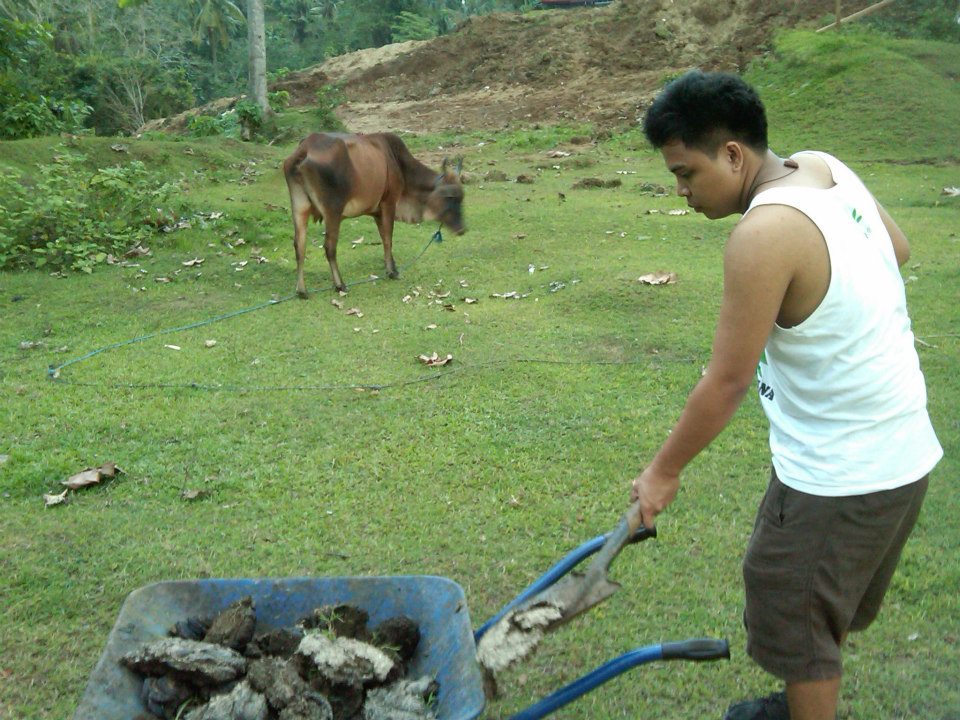
 We’ve also influenced few individuals here and abroad. It’s seems conceited to say but I humbly share this to you because it is actually true. In few parts of the Philippines and in Germany for example, there were few people who started gardening because they were inspired by our project (of course along with other great community garden example they found in the internet). In my experiences talking to many people, I was happy to learn that many of them see this kind of project as a very important thing to learn for everybody, adult and children. It looks sad or pity to me that they can’t totally do it because of their everyday financial obligation but I don’t totally agree that they have no time for this desire anymore. Some of them are cab drivers, vendors, parents, teachers, pastors, petty government officials, ordinary workers, artists, laborer, students and many others - socially concerned and responsive, willing to get off the grid anytime they have a chance! Hopefully, they will find the right time to start actualizing their simple way to self-sufficiency and social sustainability. Another good thing to notice is by how my neighbors react now every time they see me gathering cow dung. It seems that they really try to let me know that they appreciate the fact that I am doing that. They greet me with smiles and utter words of encouragement; even little kids who mostly find it very awful are now interested to help me find it easily. Unlike before, some people laugh at me because they find it unusual and awkward. 

 In terms of producing organic fertilizers, we are not that fast and we can only have very little result of our compost (mostly banana peel and cow dung) so that’s why we still need more time for that. Another thing is, we cannot easily open a water connection since we don’t own the place and installing rainwater catcher is not a smart thing to do because the area is completely open for thief. I remember one day when I was trying to water the plants, when I checked the buckets on the corner, which I covered with leaves and grasses for hiding, one of those was gone! Not having any idea who took that old but big bucket, I just shook my head in disappointment and placed the two back inside the premises of my neighbor. This neighbor is helping me before by letting me keep the buckets inside their premises and offered me water as long as I help them pay the bill. So what happens is, during late afternoon, around 3-5 PM, I go to the garden and water the plants. But before I can do that, I first need to lift the water so high and hand it over to another person over the wall. It needs so much energy and time. After I finish watering the vegetables, I fill the bucket again with water and wait for another 30 more minutes. But since tap water in this area is now very limited, controlled and diverted to other housing subdivisions, available only during late at night and very early in the morning (from around 11PM to 5AM), I cannot do that anymore. I can’t go to my neighbor’s house at around 11 in the evening and fill the bucket or wake up 4 in the morning, still dark, and water the plants. Also, because my back often hurts, I think my body is quite weak to carry heavy things every day. And besides, we don’t have a budget allotted for paying the water this time so I stopped doing that.
As of now there is not enough water to keep some of the plants alive and there are not enough good areas to plant vegetables to keep the volunteers motivated. So for now we only depend on rains but in spite of it, I am still continuing the productivity of the place. For as long as it is available and open for us, we will use it. And even though it is not producing much food for many people, we will still continue growing stuff there. It’s a good thing as well that another people from the neighbors are now planting some things in the garden. Well it’s just some few sweet potato and okra (they are just using a very small part because they already have a garden in their church) but it’s great to see them starting to be interested in that area. So there are times that we work together, fixing the fences, clearing the weeds in some parts and keeping the goats and other animals away. So as of now there’s not much exciting things in the garden but we are constantly working there, waiting to see how it goes this second year. 

 Speaking of water, I am also very happy to tell you all that earlier last month (May) we had a very wonderful opportunity of meeting an important activist and film enthusiast. Steven Starr, the executive producer of The Garden and Flow: for the love of water (both documentary films screened last year for the community here at Bread Homes as part of the SG education program) came here in Davao. So together with the organizations BALUD and KAUBAN (social and environmental groups), we organized another screening of Flow, this time in a much bigger venue and with more people. It turned out very effective and viewers were moved by how the film clearly discussed the global water situation and by the very serious calling it presented. Some of them were surprised by the water crises brought about by different sinister transnational corporations such as Coca Cola, Pepsi, Vivendi and many more, who privatized the water sources for dam purposes and some are for manufacturing their products. They were quite disgraced to see how these corporations are destroying the environment and poisoning the main water sources around the world. After the movie, people exchanged questions and ideas regarding how to get involved in taking actions for the benefit of our future water consumption and watersheds. In the end, a loose organization was found to kick start a new water vigilance group. In the evening, Steven and his friends spent time with us while we were having a dinner. After a while he then hugged us goodbye and promised to come back later this year. He also left a copy of The Garden, a documentary film about the South Central Farm community supported garden in California.
So for now these are the usual things we do in terms of gardening and community education project. Most of my routine is composed of garden works in the morning, selling cds in the afternoon, and writing (songs, poetry, and essays) afterwards or in the evening. Luckily I also still find time to read books, watch documentary movies, meet my friends and even perform my music at gigs. I also appreciate the fact that every now and then, mainly because of SG project, we meet people from different parts of the world. We are very pleased to have those meaningful times in the garden, together with those people, doing small things that help us all. With those people from France, Germany, Switzerland, and Manila, our SG experience is, in general, very uplifting and colorful. Also because of this project, the principal and some teachers in a high school nearby requested and elected me as one of their partners in improving their school (Bernardo Carpio National High School). I am now one of the officials in their school so it means I have another opportunity to help more people, promote the project or maybe to start another one. Speaking of projects, we also just finished our summer art class. Although it was very short (12 days in three weeks), it was still worthy and meaningful. Most of the participants are earlier volunteers of SG so we are all quite familiar with each other. Somehow, it was easily done. 
We gave them 3 lessons per day, not so much but sad to say some of them didn’t finished the whole class. For whatever reasons, I am not sure. One possible reason is maybe because some of the parents still doubt us; it was because we were honest about our true beliefs in life and our disbelief in Christianity and other organized religion. We cannot go on forever denying our real thoughts and feelings especially about this issue…not anymore! For them if you don’t worship gods, or join religion, you must be an “evil person”. It’s another prejudice embedded deep in the bowels of “filipino” psyche and culture, it’s utterly destructive and limiting so it needs to be confronted and stopped. Anyway, these are the news we want to share to you. As of now we can’t show you more photos because our camera was stolen some months ago and another reason is, there is not much thing to show as of now. Thanks for your time and please watch out for more post in the next few days.